
The Quiet Power of Mantras: Why Sacred Sound Matters in Yoga
In the modern world, yoga is often associated with movement, flexibility, and physical wellbeing. Yet beneath the postures and flowing sequences lies a much deeper tradition — one rooted in breath, awareness, meditation, and sacred sound. One of the most beautiful and transformative practices within yoga is the use of mantras.
Whether softly whispered at the beginning of a class, repeated silently during meditation, or chanted collectively in community, mantras have the power to calm the mind, focus the heart, and reconnect us to something deeper within ourselves.
What Is a Mantra?
The word mantra comes from the ancient Sanskrit language.
Man means “mind”
Tra means “tool” or “vehicle”
A mantra, therefore, is often described as a “tool for the mind.”
Traditionally, mantras are sacred sounds, words, or phrases repeated either aloud or silently to help guide awareness inward. Some mantras are ancient Sanskrit syllables passed down through thousands of years of yogic tradition, while others can be simple affirmations or meaningful intentions.
At their heart, mantras help quiet the constant mental chatter that so many of us experience every day. They create rhythm, focus, and stillness.
Why Are Mantras So Important?
In yoga philosophy, sound is considered deeply powerful. Ancient yogic teachings suggest that vibration influences not only the mind, but also the body, emotions, and energetic state.
When we repeat a mantra, we begin to shift our attention away from distraction and toward presence.
This is why mantra practice has remained central to yoga and meditation traditions for centuries.
1. Mantras Calm the Nervous System
Modern life keeps many of us in a near-constant state of stimulation. The repetition of a mantra creates a soothing rhythm that encourages slower breathing, reduced mental activity, and a greater sense of calm.
Even a few minutes of chanting or silent repetition can help regulate the nervous system and create a feeling of grounding.
2. Mantras Improve Focus and Meditation
One of the greatest challenges in meditation is maintaining concentration.
The mind naturally wanders.
A mantra acts as an anchor — gently bringing awareness back whenever attention drifts. Over time, this practice can improve mental clarity, concentration, and emotional steadiness.
3. Mantras Create Positive Inner Dialogue
Many of us unknowingly repeat negative thoughts throughout the day.
Mantras can help reshape that inner dialogue with words rooted in compassion, peace, strength, or self-belief.
Simple phrases such as:
“I am grounded.”
“I am enough.”
“Peace begins within.”
can become powerful reminders of our deeper truth.
4. Mantras Connect Us to Tradition and Community
Chanting together can be a deeply moving experience.
In yoga spaces around the world, shared mantras create a sense of unity, connection, and collective energy. They remind us that yoga is not simply an individual practice, but also a shared human experience.
The Meaning Behind “Om”
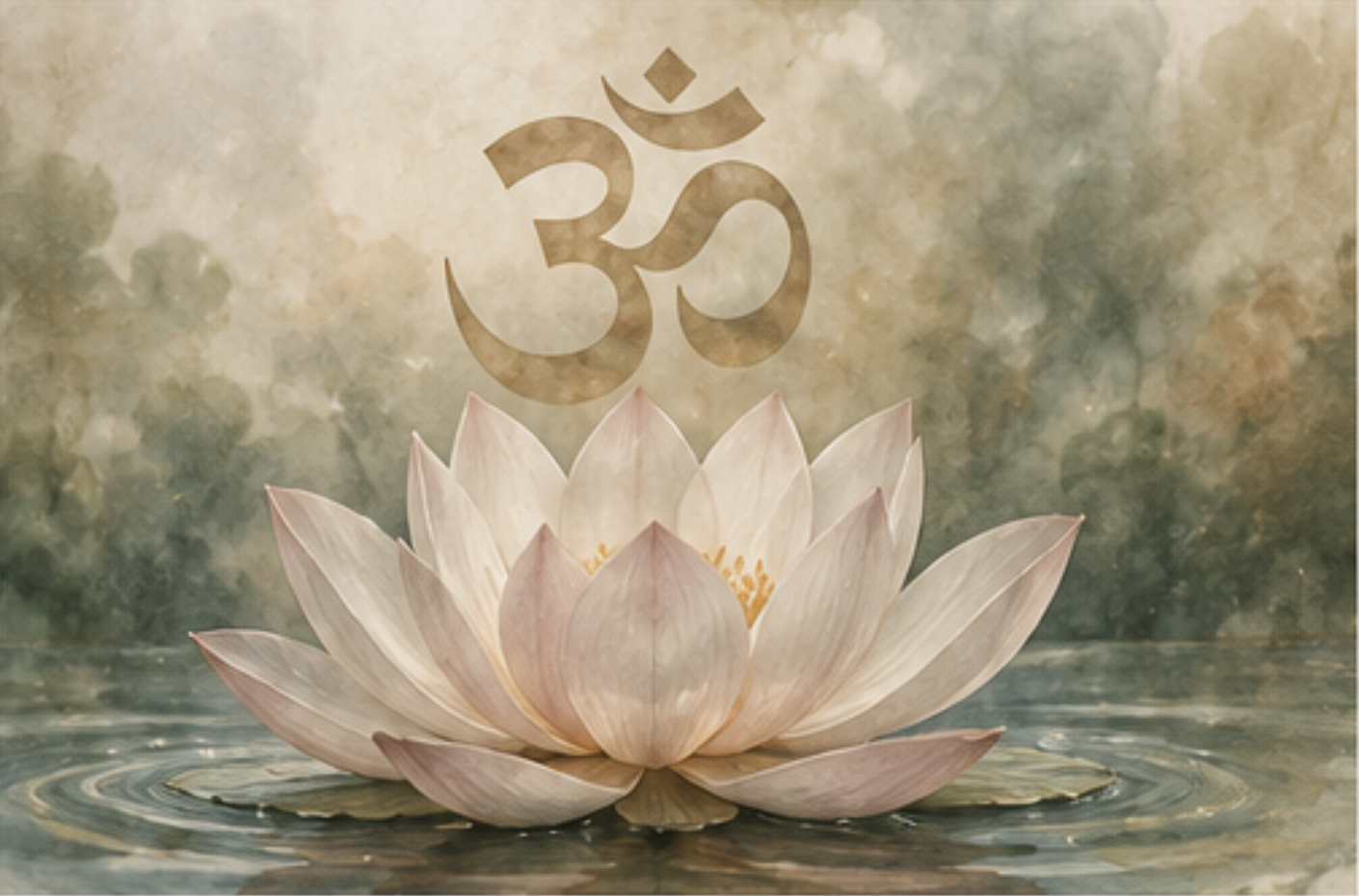
Perhaps the most recognised mantra in yoga is Om (sometimes written as Aum).
In yogic tradition, Om is considered the primordial sound — the vibration believed to underlie all existence.
Rather than belonging to a particular religion, Om represents connection:
connection to breath
connection to awareness
connection to the present moment
connection to the universe itself
Chanting Om can create a deep feeling of resonance throughout the body, helping practitioners settle into stillness and presence.
Mantras and Modern Science
Interestingly, modern research increasingly supports what ancient yogic traditions have taught for centuries.
Studies on chanting and repetitive sound practices suggest they may:
reduce stress and anxiety
support emotional regulation
improve concentration
encourage slower brainwave activity associated with relaxation
enhance feelings of wellbeing and connection
The vibrational quality of chanting may also stimulate the vagus nerve, which plays an important role in relaxation and emotional balance.
How to Begin a Simple Mantra Practice

Starting a mantra practice does not need to be complicated.
You can begin with just a few quiet minutes each day.
A Gentle Practice to Try
Sit comfortably and close your eyes.
Take several slow, deep breaths.
Choose a simple word, phrase, or mantra.
Repeat it slowly — aloud or silently.
Allow the rhythm of the words to settle your attention.
When the mind wanders, gently return to the mantra.
There is no need to force anything.
The practice is not about perfection — it is about presence.
A Few Beautiful Mantras for Beginners
Om Shanti
A Sanskrit mantra meaning “peace.” Often repeated to invite inner calm and harmony.
So Hum
Translated loosely as “I am that.” This mantra is often linked to the breath and reminds us of our connection to life itself.
Lokah Samastah Sukhino Bhavantu
A traditional mantra wishing peace, freedom, and happiness for all beings everywhere.
Sat Nam
Commonly used in Kundalini Yoga, meaning “truth is my identity.”
The Deeper Invitation of Mantra
At first, mantra practice may seem simple — just repetition of sound.
But over time, many practitioners discover something profound.
Mantras help us listen.
They soften the noise of the outside world and create space to hear the quieter wisdom within ourselves.
In a culture that constantly encourages speed, productivity, and distraction, mantra practice offers something rare:
stillness.
And in that stillness, we often rediscover clarity, compassion, and connection.
Final Thoughts
Yoga is far more than movement.
It is a practice of returning to ourselves.
Mantras are one of the oldest and most powerful tools within that journey — helping steady the mind, open the heart, and guide us back to presence again and again.
Whether you are completely new to yoga or deepening an existing practice, exploring mantra can bring a beautiful new dimension to your experience.
Sometimes the simplest sounds carry the deepest wisdom.
