
The Ancient Meaning of Namaste
More Than a Greeting
PHILOSOPHY • CULTURE • TRADITION
5 minute read
“Namaste is not simply something we say.
It is a way of seeing one another.”
At the end of many yoga classes, there is often a quiet moment.
Hands come together at the heart. Heads bow gently. And a single word is spoken:
Namaste.
For some, it has become a familiar ritual — calming, comforting, almost automatic. Yet behind this simple gesture lies a much older and deeper meaning rooted in Indian philosophy, spirituality, and human connection.
Long before it appeared in modern yoga studios, Namaste carried profound cultural and spiritual significance.
And at its heart is a reminder that yoga was never only about movement.
What Does Namaste Actually Mean?
The word Namaste comes from Sanskrit, one of the ancient sacred languages of India.
It is traditionally broken into two parts:
Namah — meaning “to bow,” “to honour,” or “to offer reverence”
Te — meaning “to you”
Together, Namaste is often translated simply as:
“I bow to you.”
But the deeper philosophical meaning extends far beyond politeness.
In yogic and spiritual traditions, Namaste reflects the belief that there is something sacred within every human being — something beyond personality, status, appearance, or circumstance.
A common interpretation is:
“The divine in me bows to the divine in you.”
Whether understood spiritually, symbolically, or simply humanly, the essence remains the same:
a recognition of shared humanity and inner worth.
The Gesture Behind the Word
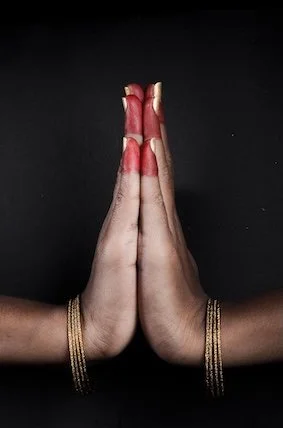
Traditionally, Namaste is accompanied by placing the palms together at the centre of the chest, known as Anjali Mudra.
The gesture itself carries symbolism.
The right and left hands represent dualities:
strength and softness,
logic and intuition,
self and other.
Bringing them together symbolises unity and balance.
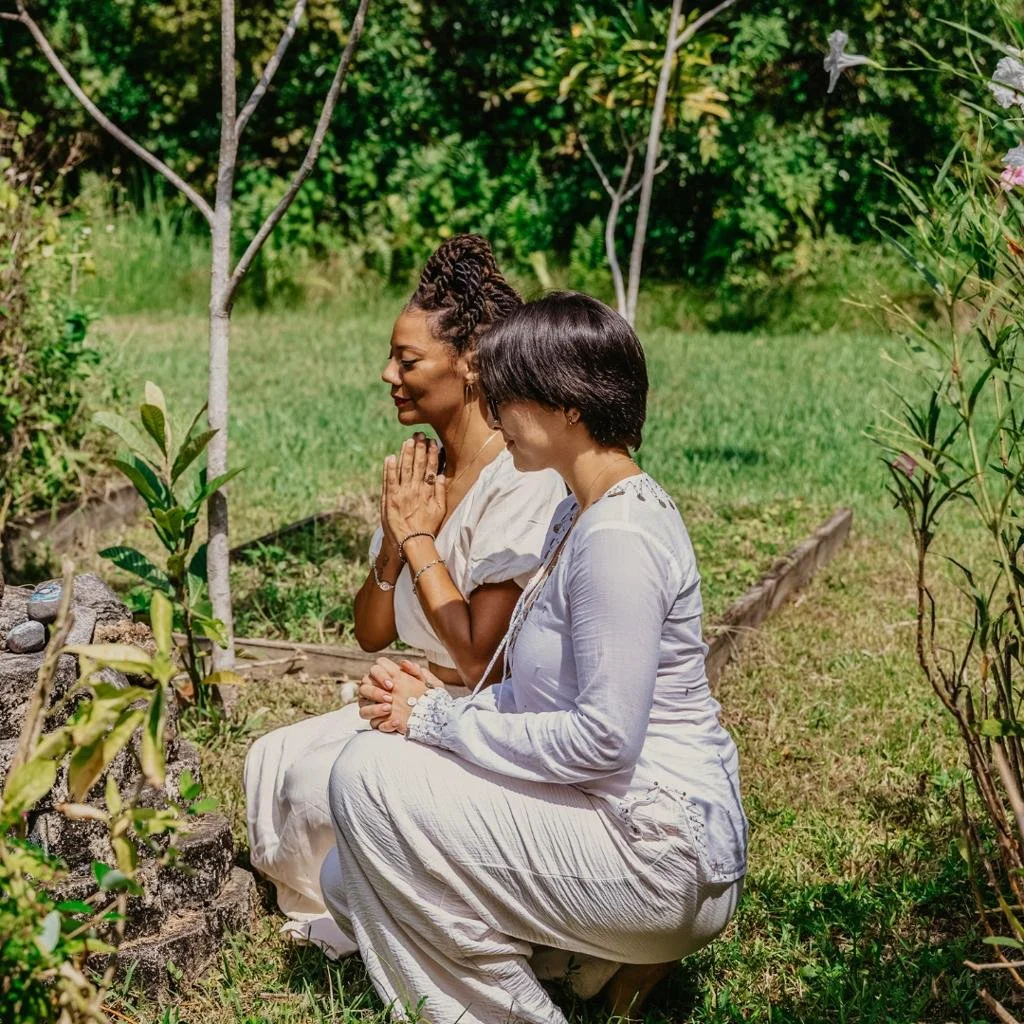
The slight bow of the head is equally important. It reflects humility — a momentary softening of the ego in acknowledgment of another person.
In Indian culture, this gesture has long been used as a respectful greeting, expression of gratitude, or sign of reverence.
It was never intended as performance or trend, but as a sincere act of presence.
Beyond the Surface
In recent years, Namaste has become widely recognised through global yoga culture. It appears on studio walls, clothing, social media captions, and wellness branding.
But many practitioners have also questioned whether its deeper meaning is sometimes lost through overuse or commercialisation.
Ancient yogic traditions remind us that words become meaningful through intention.
Without awareness, Namaste can become automatic — spoken without reflection. But when understood more deeply, even a small gesture can become powerful.
To say Namaste sincerely is to pause for a moment and recognise another person not as a role, achievement, appearance, or identity, but as a fellow human being sharing the same fragile and complex experience of life.
In this sense, Namaste becomes less about spirituality as performance and more about presence, respect, and connection.
Why Namaste Matters in Yoga
Yoga was originally designed to cultivate awareness — not only of the body, but of how we relate to ourselves and others.
The philosophy behind Namaste reflects this beautifully.
It reminds us that beneath distraction, comparison, competition, and ego, there is something fundamentally shared between people.
Breath.
Awareness.
Emotion.
Human vulnerability.
In a world that often encourages separation and constant self-focus, even brief moments of mutual acknowledgment can feel surprisingly meaningful.
This is why many yoga practitioners continue to value the tradition of Namaste today. Not because it is fashionable, but because it creates a moment of stillness and connection at the close of practice.
A reminder that yoga extends beyond the mat into the way we move through the world.
“Yoga begins inwardly,
but it inevitably changes how we see one another.”
Why We Continue the Tradition
At Yoga for Mortals, we see Namaste not as a performance, but as a quiet expression of gratitude and shared humanity.
Yoga is not about becoming superhuman or spiritually perfect. It is about learning to meet ourselves — and others — with greater awareness, compassion, and honesty.
The ancient meaning of Namaste reminds us that every person carries both struggle and light within them.
And perhaps there is something deeply healing in remembering that we are not navigating life alone.
Begin Your Own Practice
.
Sometimes the smallest rituals carry the deepest meaning.
A breath.
A bow.
A moment of stillness.
Namaste.
