
What the Lotus Flower Really Symbolises
The Ancient Meaning Behind Yoga’s Most Recognisable Symbol
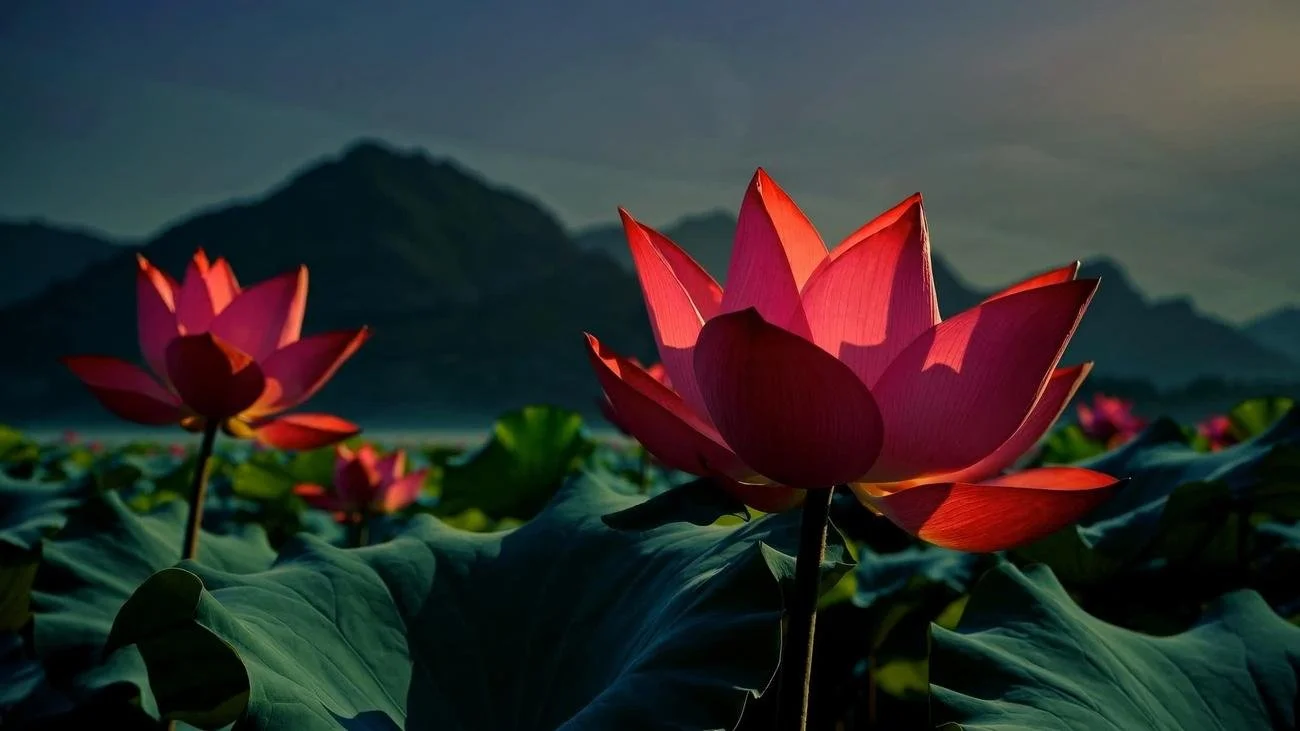
PHILOSOPHY • SYMBOLISM • INNER GROWTH
5 minute read
“The lotus does not bloom despite the mud.
It blooms because of it.”
Few symbols appear more often in yoga and spiritual traditions than the lotus flower.
It is found in ancient texts, temple carvings, meditation practices, artwork, and yoga philosophy across centuries of Indian culture. Today, it has also become deeply woven into modern wellness imagery — appearing on studio walls, jewellery, tattoos, and yoga mats around the world.
Yet the lotus was never chosen simply because it was beautiful.
For ancient yogic traditions, the lotus represented something profoundly human:
the possibility of transformation.
Its symbolism speaks not of perfection, but of growth through difficulty, awakening through experience, and the quiet emergence of wisdom from the conditions of ordinary life.
Why the Lotus Became Sacred
Unlike most flowers, the lotus grows in muddy, murky water.
Its roots remain buried deep beneath the surface, yet each morning the flower rises upward through the water toward light, eventually blooming untouched above it.
Ancient spiritual traditions saw deep meaning in this process.
The mud represented the struggles of human existence:
fear,
suffering,
attachment,
confusion,
ego,
loss.
The flower symbolised the possibility of rising beyond these conditions without denying them.
The lotus does not reject the mud from which it grows.
It transforms it.
For this reason, the lotus became a powerful symbol throughout Hinduism, Buddhism, and yogic philosophy — representing purity, awakening, resilience, and spiritual evolution.
A Symbol of Inner Awakening
In yogic traditions, the unfolding petals of the lotus often represent the gradual expansion of consciousness.
Just as the flower slowly opens toward sunlight, human awareness is believed to awaken gradually through practice, self-study, and experience.
This is why lotus imagery frequently appears alongside meditation and yoga teachings. The path of yoga was never understood as instant transformation. It was viewed as a lifelong unfolding.
Layer by layer.
Breath by breath.
Moment by moment.
The lotus reminds us that growth is rarely dramatic or immediate. Most transformation happens quietly beneath the surface long before it becomes visible externally.
The Meaning of the Lotus in Yoga Practice
One of the most recognised yoga postures is Padmasana, or Lotus Pose — a seated meditation posture traditionally associated with stillness, balance, and spiritual focus.
But the deeper symbolism extends beyond the posture itself.
The lotus reflects the central philosophy of yoga:
that beneath distraction, suffering, and mental turbulence exists the possibility of clarity and inner steadiness.
Not because life becomes perfect, but because awareness deepens.
Ancient yogis understood that difficulty is not separate from growth. In many ways, it becomes the very condition through which growth becomes possible.
The lotus therefore represents more than peace.
It represents transcendence without escape.
To remain fully human while continuing to rise toward greater awareness.
Why the Symbol Still Resonates Today
Modern life often creates pressure to appear constantly composed, successful, productive, or emotionally polished.
The symbolism of the lotus offers something far gentler and more honest.
It reminds us that struggle does not make us broken.
It makes us human.
No life unfolds without periods of uncertainty, grief, confusion, exhaustion, or change. Yet the lotus suggests that beauty and wisdom can emerge not after difficulty disappears, but through learning to move with it differently.
Perhaps this is why the symbol continues to resonate so deeply across cultures and generations.
Because most people understand, in some way, what it means to grow through difficult conditions.
More Than a Wellness Symbol
In recent years, the lotus has sometimes become reduced to decoration within modern wellness culture — aesthetically pleasing, but disconnected from its original depth.
Yet its ancient meaning remains remarkably relevant.
The lotus was never meant to symbolise perfection or spiritual superiority. It symbolised the quiet courage of continuing to grow despite the inevitable complexity of being human.
To ancient yogis, awakening did not belong only to saints, monks, or enlightened figures hidden away from ordinary life.
It belonged to anyone willing to practice awareness within the reality of their own experience.
“The lotus blooms slowly,
but it always turns toward the light.”
Why This Symbol Matters to Us
At Yoga for Mortals, the lotus represents something deeply important:
the understanding that yoga is not reserved for perfect people living perfect lives.
It is for ordinary human beings navigating stress, uncertainty, emotion, responsibility, and change.
For mortals.
The ancient symbolism of the lotus reminds us that growth rarely begins from ideal conditions. Often, it begins exactly where we are.
And perhaps there is something profoundly hopeful in that.
Begin Your Own Practice
Yoga does not ask us to become flawless.
Only present enough to keep unfolding.
Like the lotus,
one breath at a time.
